
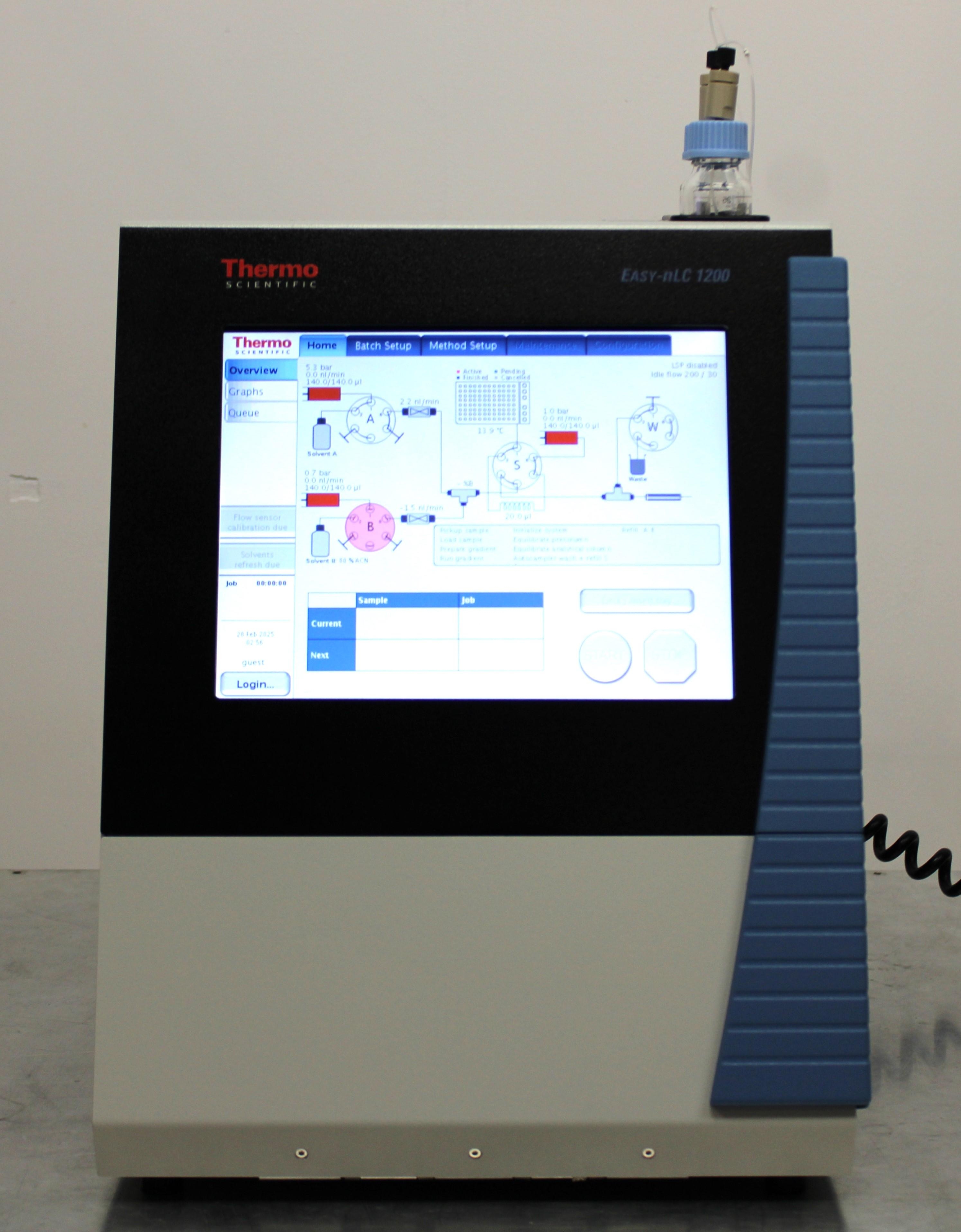
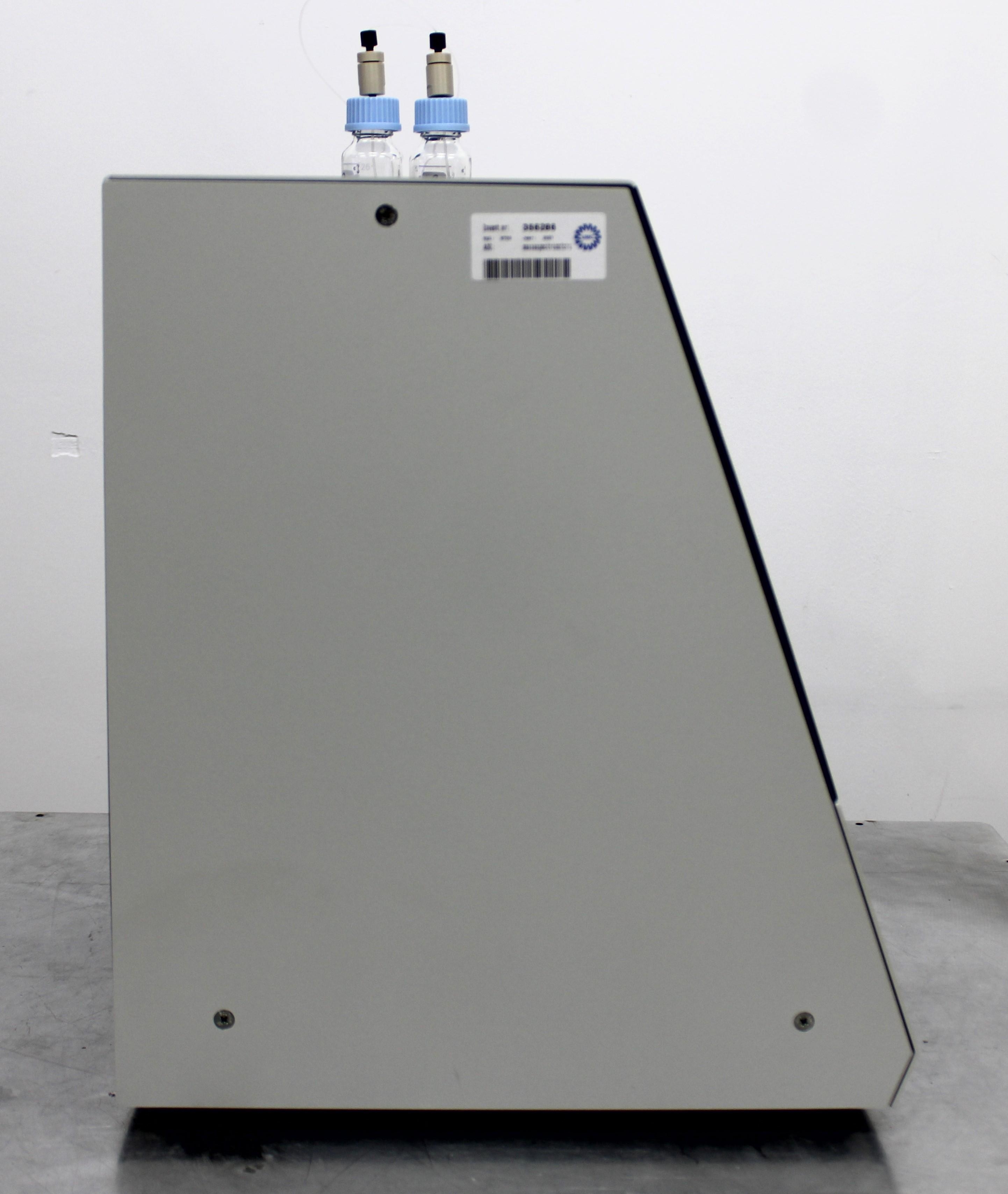
Thermo Easy-nLC 1200 Liquid Chromatography Binary Nano-Flow LC System
Thermo Scientific
Details
-
CategoryHPLC / FPLC / GC / CE
-
Dimension36.0cm x 38.0cm x 46.0cm
-
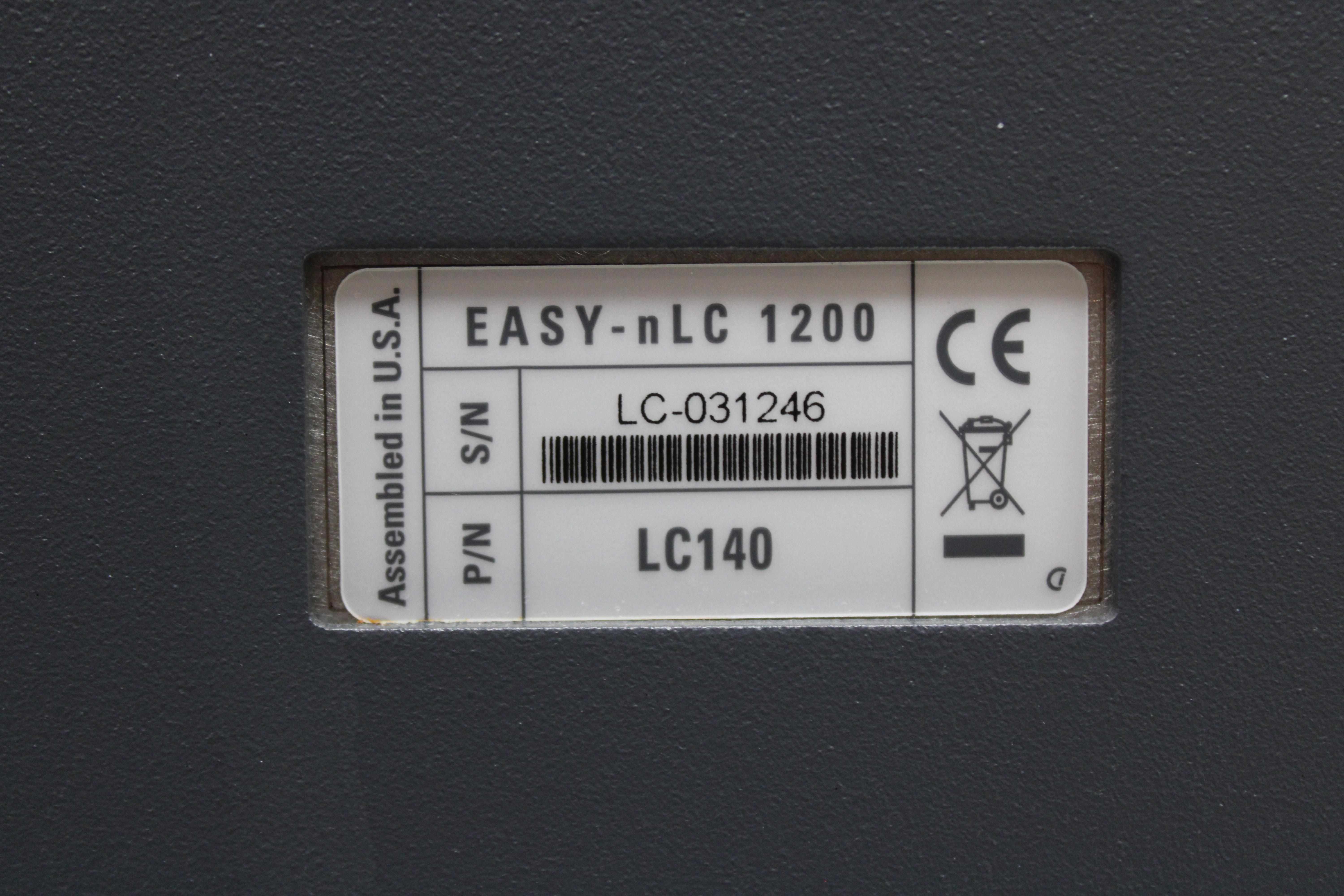
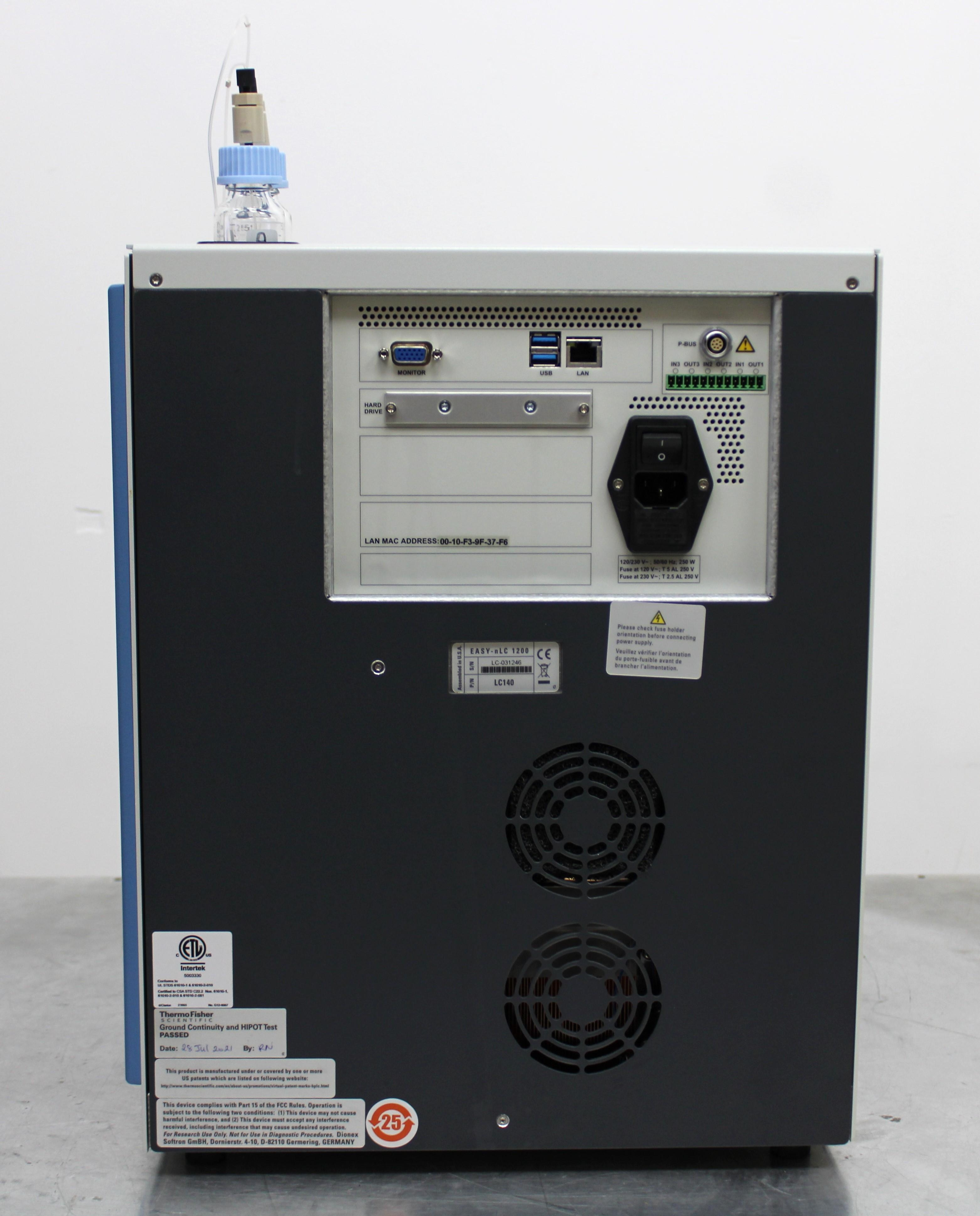
SerialLC-031246
-
Shipping TypeFedEx Ground
-
Manufacturing2021-07-28
-
Voltage / Hertz120-230V / 50Hz/60Hz
Description
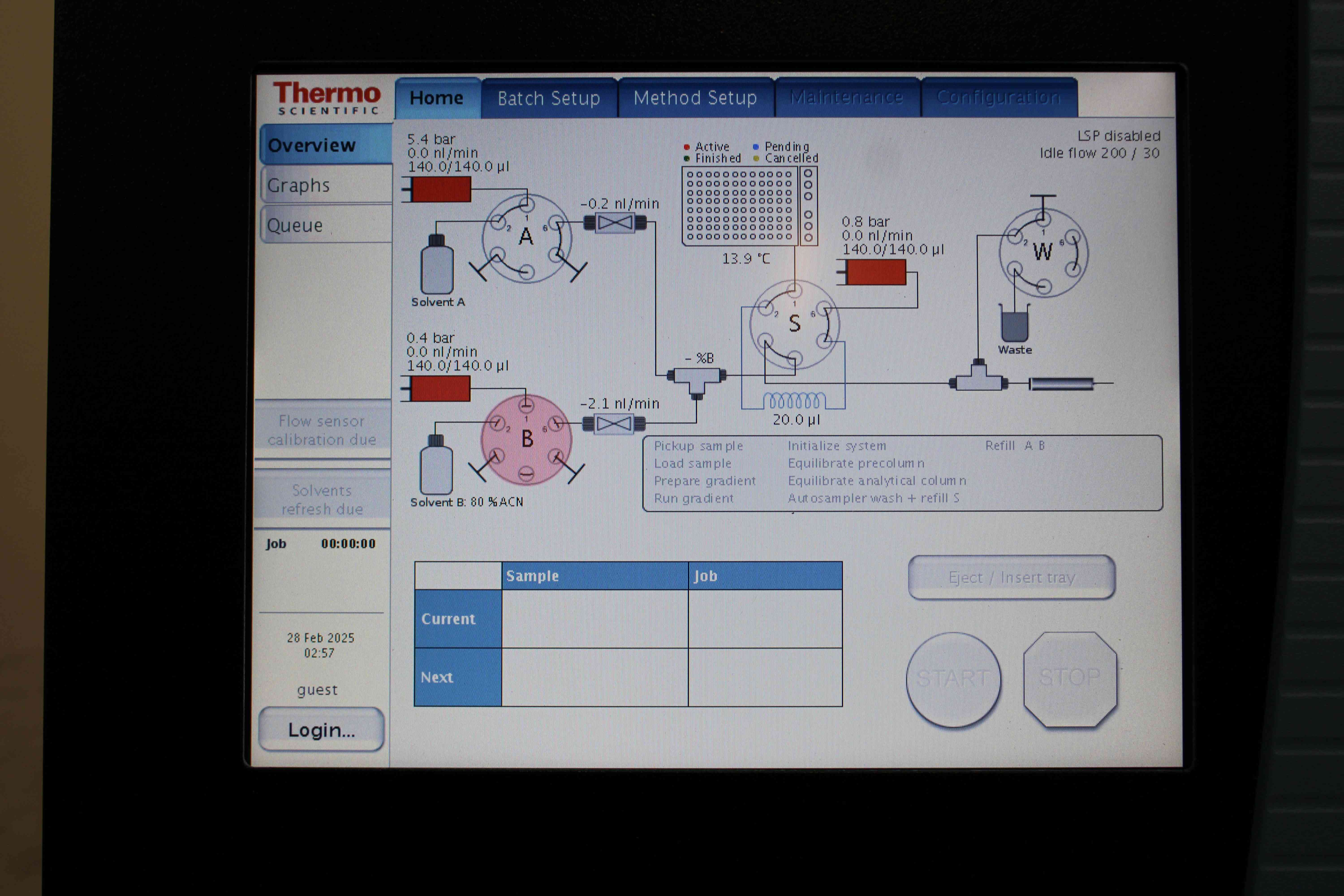
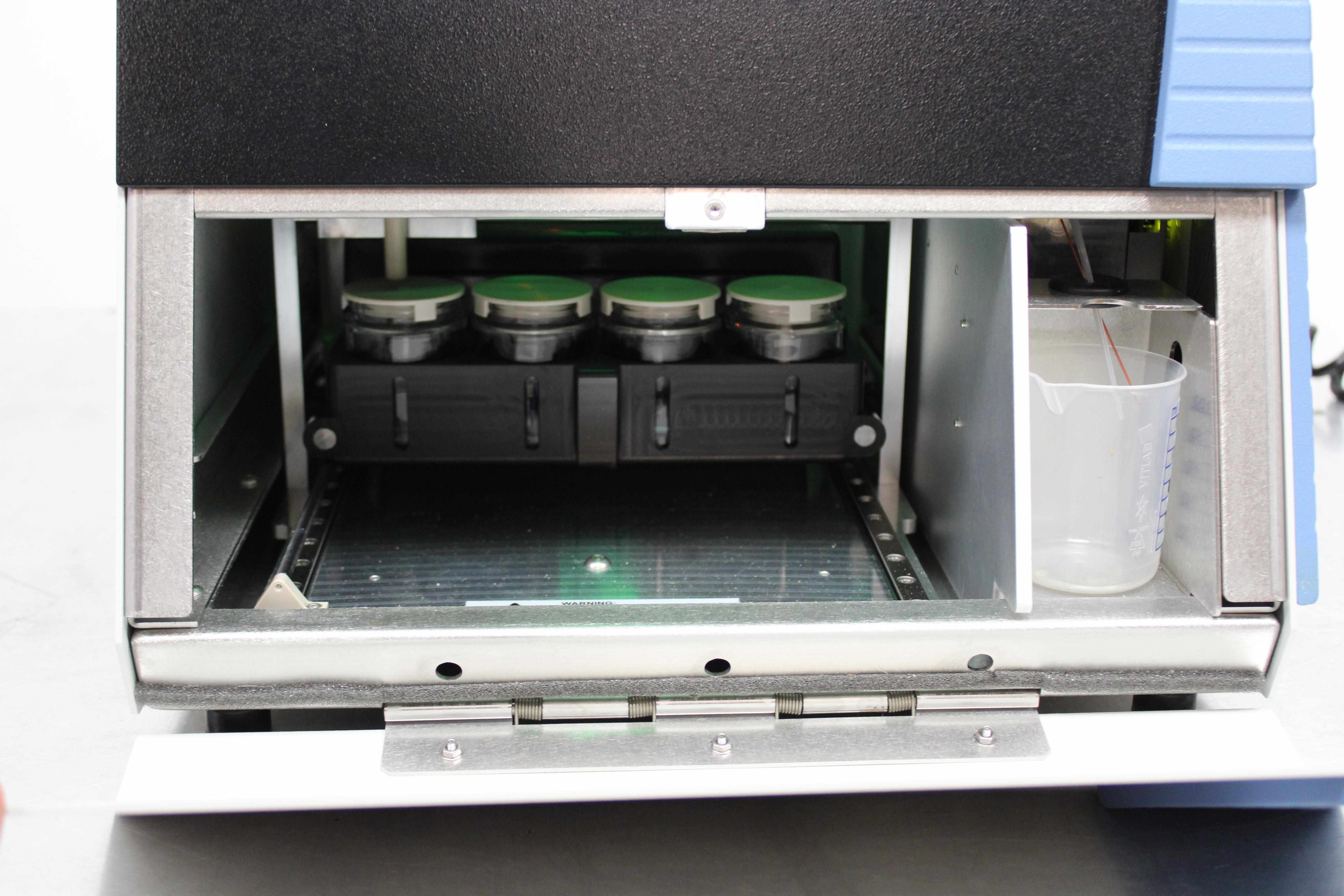
The Thermo Easy-nLC 1200, manufactured in 2021, is a versatile liquid chromatography system designed to deliver precise and efficient nano-flow separations. Operating within a pressure range of 0 to 1200 bar, this system is equipped with three high-pressure pumps and an autosampler capable of holding both microtiter plates and standard vials. With a user-friendly embedded computer and a 12.1-inch touch-sensitive monitor, it ensures streamlined operations. The Easy-nLC 1200 includes multiple high-pressure rotary valves, check valves, and nano-flow sensors, providing robustness and accuracy. The system is capable of cooling storage for solvents and waste, optimizing storage conditions by maintaining temperatures 20 °C below the ambient level. It is designed for seamless integration into life science research settings.
Key Features
- Operating pressure range: 0 to 1200 bar
- Three high-pressure pumps
- Autosampler for microtiter plates and standard vials
- Embedded computer with a 12.1-inch touch-sensitive display
- Cooling ability up to 20 °C below ambient
Specifications
- Pressure range: 1 to 1200 bar
- Embedded computer control with glove-compatible touchscreen
- Three high-pressure pumps with individual pressure sensors
- Four high-pressure rotary and four check valves for liquid handling
- Two nano-flow sensors
- Accommodates up to one microtiter plate (96 or 384 wells) and additional vials
- Solvent and waste containers with cooling functionality
Weight
Imperial: 14.4 Pounds
Metric: 6.53 Kilograms
Shipping Dimensions
Imperial: 16.8 lb x 18.0 lb x 21.6 lb
Metric: 42.67 cm x 45.72 cm x 54.86 cm
Harmonized Code
841940
Harmonized Code Details
841940 - Distilling or rectifying plant equipment. This code fits due to the equipment’s function in separation processes typical of chromatography applications.
Comments 0
There are currently no public comments.