
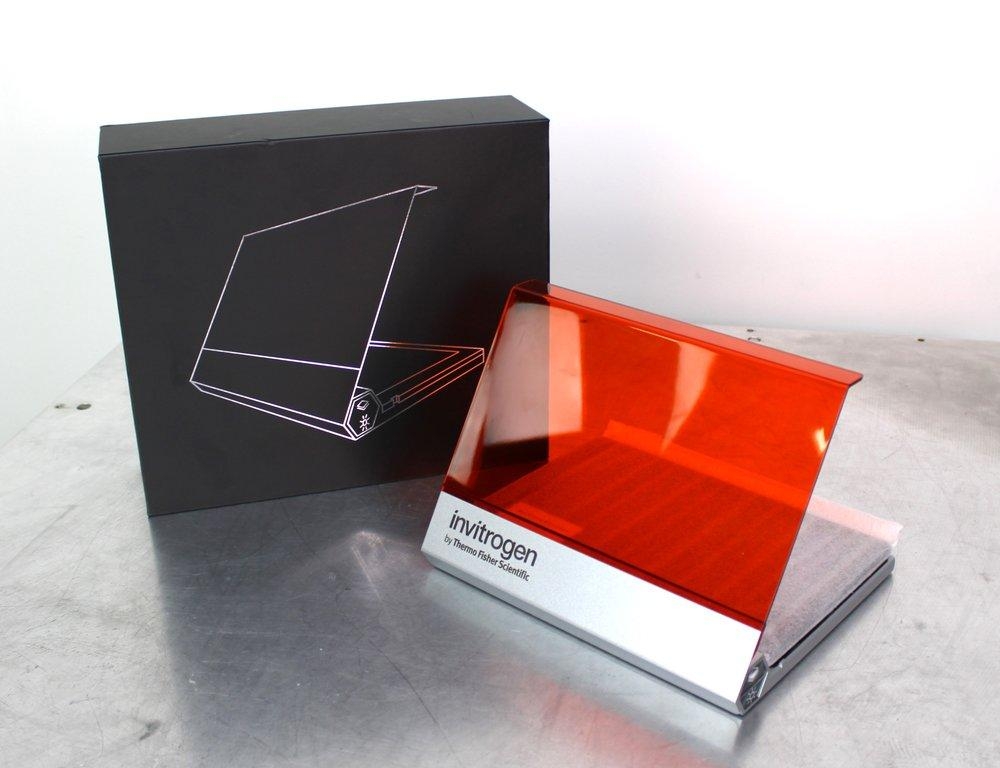
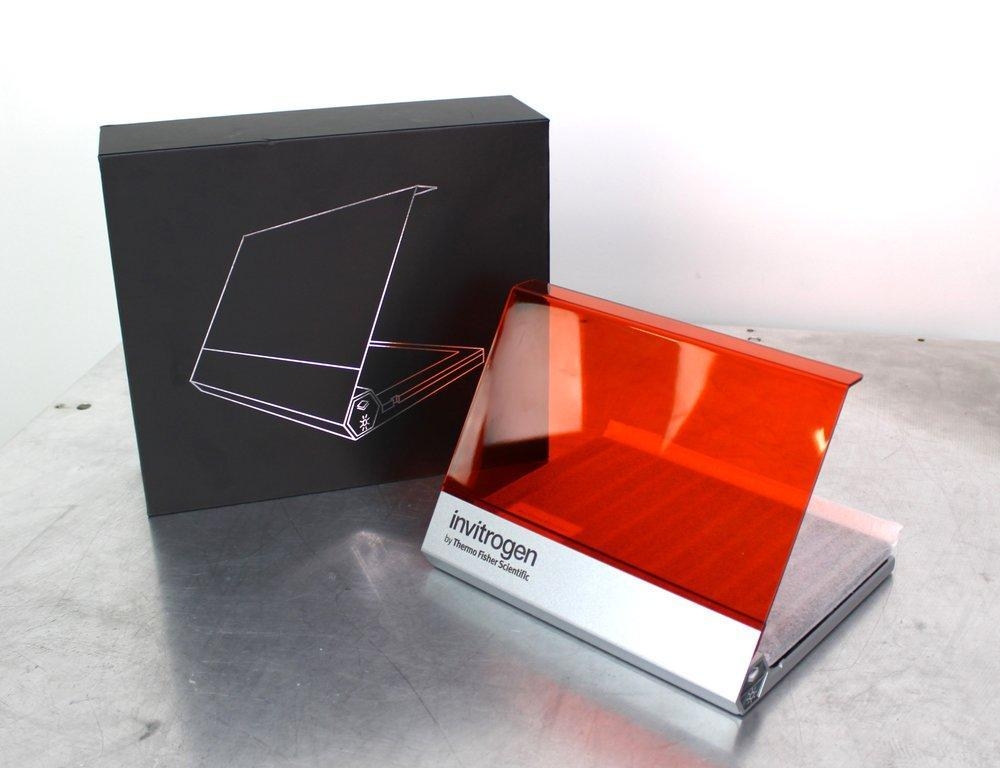
Thermo LB0100 Transilluminator, Electrophoresis, Dual LED for Gel Visualization
Thermo Fisher Scientific
Details
-
CategoryElectrophoresis
-
Dimension19.0cm x 23.0cm x 4.0cm
-
Serial112LB00180
-
Shipping TypeFedEx Ground
-
Manufacturing2023-03-15
-
Voltage / Hertz240V / Does Not Apply
Description
The Thermo Invitrogen Dual LED Blue/White Light Transilluminator LB0100, manufactured in 2023, is a cutting-edge tool for visualization of nucleic acid gels, protein gels, and membrane stains. This equipment utilizes dual LED light sources, providing flexibility with both blue and white lighting options. Key features include a hinge-free magnetic filter screen for observation without goggles, automatic power-off for safety, and adjustable light intensity for optimal imaging quality. Its compact design ensures ease of mobility and storage. With an amperage of 2 A and LED lighting type, it offers three adjustable intensity levels. The 470 nm excitation and 580 nm emission wavelengths are ideal for a range of stains, supported by a blue uniform plate with glass lot no. 1120303. Note: One unit was opened for photographs; 10 units are available in an unopened, unused condition.
Key Features
- Dual LED light sources: blue and white light
- Magnetic filter screen with hinge-free design
- Five-minute automatic power-off for safety
- Three-level adjustable light intensity
- Compact and portable design
- 470 nm excitation, 580 nm emission wavelengths
Specifications
- Amperage: 2 A
- Lighting Type: LED
- Light Intensity: Three Level Adjustment
- Wavelengths: 470 nm Excitation, 580 nm Emission
- Includes Blue Uniform Plate with Glass Lot No. 1120303
Weight
Imperial: 5.29 Pounds
Metric: 2.4 Kilograms
Shipping Dimensions
Imperial: 8.98 lb x 10.87 lb x 1.89 lb
Metric: 22.81 cm x 27.61 cm x 4.8 cm
Harmonized Code
90273000
Harmonized Code Details
90273000 - Spectrometers, spectrophotometers and other optical instruments and appliances. This code is relevant due to the device's function in visualizing gels and facilitating analytical applications in laboratory settings.
Comments 0
There are currently no public comments.